


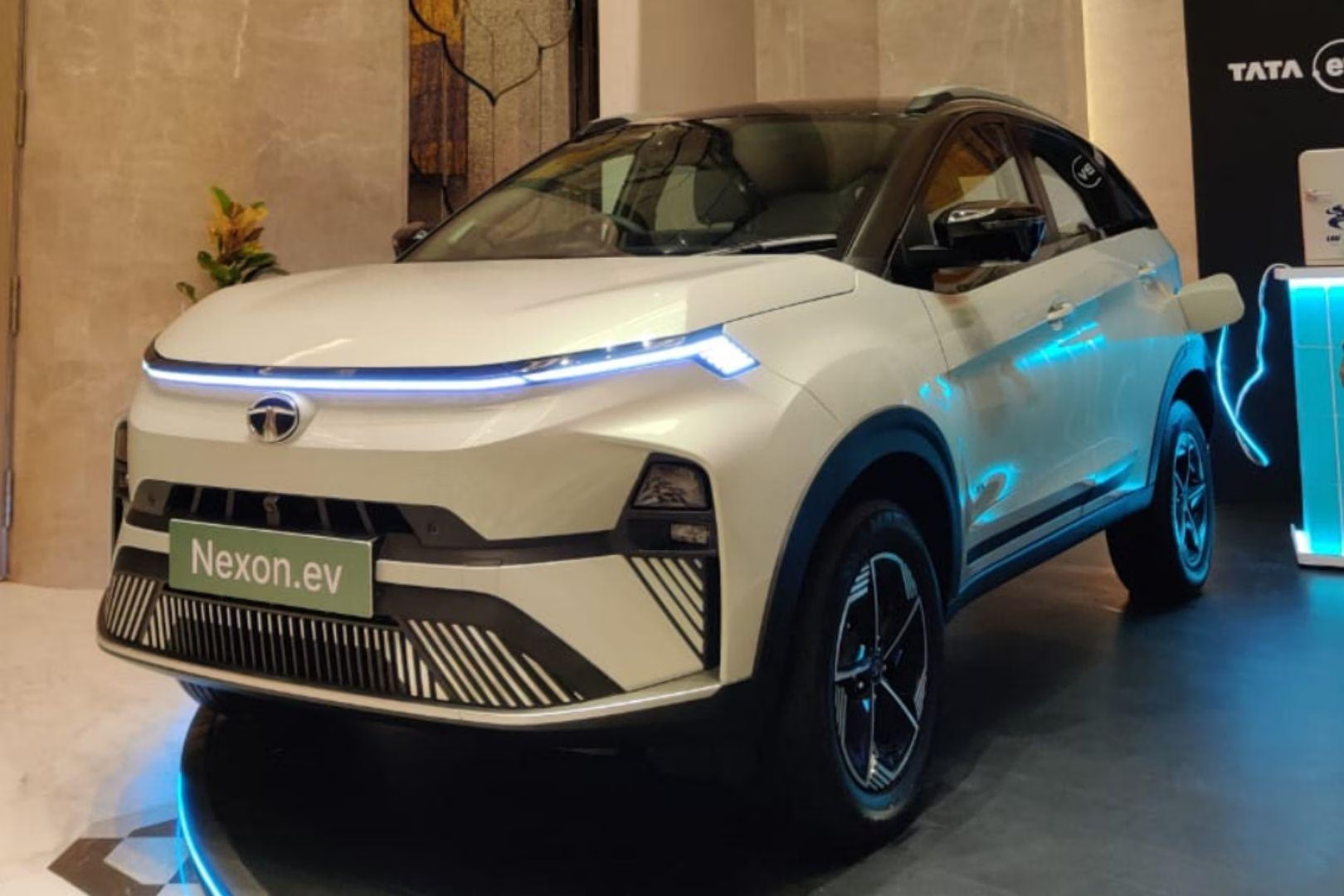
Electric vehicles (EVs) are rapidly gaining popularity in India as buyers look for cleaner, cost-effective, and future-ready mobility options. With rising petrol and diesel prices, EVs offer lower running costs, minimal maintenance, and a reduced carbon footprint. In this article, we explore the important aspects of electric cars in India — driving range, charging time, and running cost — to help you make an informed decision before buying.
Why Electric Cars Are Becoming Popular in India
Electric cars eliminate fossil fuel use and reduce emissions, aligning with India’s push toward sustainable transportation. Government incentives, expanding charging infrastructure, and improved battery technology are key drivers of EV adoption. As more manufacturers introduce EV models suited for Indian roads, choices are expanding across hatchbacks, SUVs, and luxury segments.
Understanding Electric Range
The range of an electric car refers to how far it can travel on a single battery charge. Range depends on:
-
Battery capacity (measured in kWh)
-
Driving conditions (city vs highway)
-
Speed and climate control usage
-
Weight and aerodynamics of the car
In India, most EVs currently offer a range between 200 km and 500+ km per charge, suitable for daily commuting as well as occasional long drives.
Charging Time: Home & Public Charging
Charging time is one of the most important factors when you consider an EV. There are three main types of charging:
1. Home Charging (AC Slow/Normal Charge)
This uses a standard home socket or an AC wall box. It’s convenient for overnight charging.
-
Time: 6–12 hours (depending on battery size)
-
Best for daily top-ups at home
2. Public AC Charging
Available at malls, workplaces, and public hubs.
-
Time: Similar to home charging
-
Useful during work hours or long stops
3. Fast Charging (DC Rapid/Ultra-fast)
Fast chargers cut charging time significantly and are ideal for long trips.
-
Time: 30 minutes to 1 hour
(to charge from 10% to ~80%, depending on charger & car)
Manufacturers and charging network operators are working to expand fast charging infrastructure across major highways and cities, making long-distance EV travel more practical.
Electric Car Models & Their Range
Different EVs in India offer varied range figures. Here’s a general idea of what buyers can expect:
Small & Compact EVs
These cars are perfect for city commuting and everyday use.
-
Typical range: 200–300 km
-
Lower battery capacity but affordable pricing
Mid-Size EVs
Ideal for families and mixed use.
-
Typical range: 300–450 km
-
Balanced performance & comfort
Premium EVs
Large SUVs or luxury offerings focus on range & features.
-
Typical range: 400+ km
-
Strong performance with advanced tech
Running Cost: Electric vs Petrol/Diesel
One of the biggest advantages of EVs is the running cost savings. Here’s how EVs compare:
Electricity Cost vs Fuel Cost
Electric cars convert electricity to motion more efficiently than petrol/diesel engines convert fuel. The cost per kilometre for an EV is generally much lower:
-
Electricity cost (per km): typically half or less of petrol/diesel cost per km
-
EVs have fewer moving parts, resulting in lower maintenance costs
Examples of running cost benefits:
-
No engine oil changes
-
Regenerative braking reduces brake wear
-
Fewer mechanical failures
Over time, these savings can outweigh the typically higher upfront price of an EV.
Government Incentives & Support
The Indian government offers various incentives for EV buyers under national and state schemes. These may include:
-
Tax rebates on EV purchase
-
Subsidies on electric cars
-
Lower registration charges
-
Support for EV charger installation
These incentives significantly reduce the effective cost of EV ownership and encourage faster adoption.
Charging Infrastructure in India
Charging stations are expanding across cities, highways, and residential areas. Major cities have public charging points from both government and private operators. Fast charging stations are improving connectivity between urban and interstate routes, making longer journeys feasible for EV owners.
Key Takeaways for Buyers
When choosing an electric car, consider:
-
Range: Choose a model that covers your average daily distance comfortably plus buffer.
-
Charging Access: Evaluate home charging feasibility and nearby public chargers.
-
Running Cost: Include electricity cost, maintenance savings, and incentives in total cost of ownership.
-
Features: Look for safety tech, connected features, and warranty coverage for batteries.
Electric cars are shaping the future of mobility in India. With better range, evolving infrastructure, and lower operating costs, they’re becoming an increasingly practical choice for everyday use.
Helpful Links
https://www.autocarindia.com/car-news/guide-to-electric-cars-in-india
https://www.zigwheels.com/newcars/electric-cars
https://www.cardekho.com/electric-cars
